The right quantity of custom pallet wrap is the number of rolls your wrapping stations use between reorders, plus a buffer that covers turnaround on the next batch. Custom Pallet Wrap starts at a minimum of 12 rolls, so you can measure real usage per station, split the order by roll type and set a reorder point before scaling up.
- Size orders from measured usage per wrapping station, not a rule of thumb
- Split quantities across hand, machine and jumbo rolls to match each station
- Set a visible reorder point that covers about 2 weeks of turnaround plus a margin
- Minimum order is 12 rolls, with a free mockup within 24 hours
How many rolls of custom pallet wrap should you order?
The right number of custom pallet wrap rolls is the amount your docks use between reorders, plus a buffer that covers the turnaround on the next run. Start from your own usage data rather than a rule of thumb: how many pallets leave each shift, how many revolutions your team or wrapper applies per load, and which roll type each station runs. Custom Pallet Wrap starts at a minimum of 12 rolls, so a pilot order is small enough to measure real usage before you commit to a larger program.
Quantity planning for printed pallet wrap matters more than it does for plain stretch film. Plain film can be bought from almost any distributor on short notice. Branded film is printed to order, so running out means wrapping loads in unbranded film until the next batch arrives, which defeats the reason you switched. Ordering far too much has its own cost: cash tied up in rolls, warehouse space taken from inventory, and old artwork sitting on the shelf after a rebrand.
The goal is a quantity that keeps every outbound load branded without overloading your storage. The sections below walk through how to measure usage, how to split an order across roll types, and how to stage reorders so you never wrap in plain film by accident.
How do you measure how much pallet wrap your operation actually uses?
The most reliable way to measure pallet wrap usage is a short tracking period on your current plain film before the branded order goes in. Pick a normal stretch of shipping, not a peak or a holiday lull, and record how many rolls each wrapping station goes through against how many pallets leave the building in the same window.
Track these inputs for every station:
- Outbound pallets per shift: pull this from your warehouse management system or shipping logs rather than estimating it.
- Rolls consumed: count empty cores at the end of each shift. Cores do not lie the way memory does.
- Roll type: hand rolls, machine rolls and jumbo rolls are used at very different rates, so never pool them into one number.
- Load profile: tall, sharp-cornered or unstable loads take more revolutions than short, square ones.
Divide pallets by rolls for each station and you have a pallets-per-roll figure grounded in your own floor. Multiply that by forecast outbound volume for the period you want one order to cover, and you have a starting quantity. If you already run a pre-stretch wrapper, keep its setting the same during tracking, because changing pre-stretch changes how far each roll goes.
Should you split a custom pallet wrap order across hand, machine and jumbo rolls?
Yes, most operations should split a custom pallet wrap order by roll type, because each wrapping station draws from its own stock. A building with a turntable wrapper and a few manual stations needs both machine rolls and hand rolls, and ordering only one leaves part of the dock wrapping in plain film.
| Roll type | Where it is used | Planning note |
|---|---|---|
| Hand stretch wrap roll | Manual stations, small docks, touch-up wrapping | Usage swings with staffing and technique, so track by shift |
| Machine stretch wrap roll | Semi-automatic and automatic wrappers | Usage tracks closely with outbound pallet count |
| Extended core jumbo roll | High-volume manual stations that want fewer roll changes | Fewer changeovers, so each roll covers more loads |
| Pre-stretched eco wrap | Manual wrapping where operators struggle to stretch film | Lighter rolls, so plan by loads covered rather than roll count |
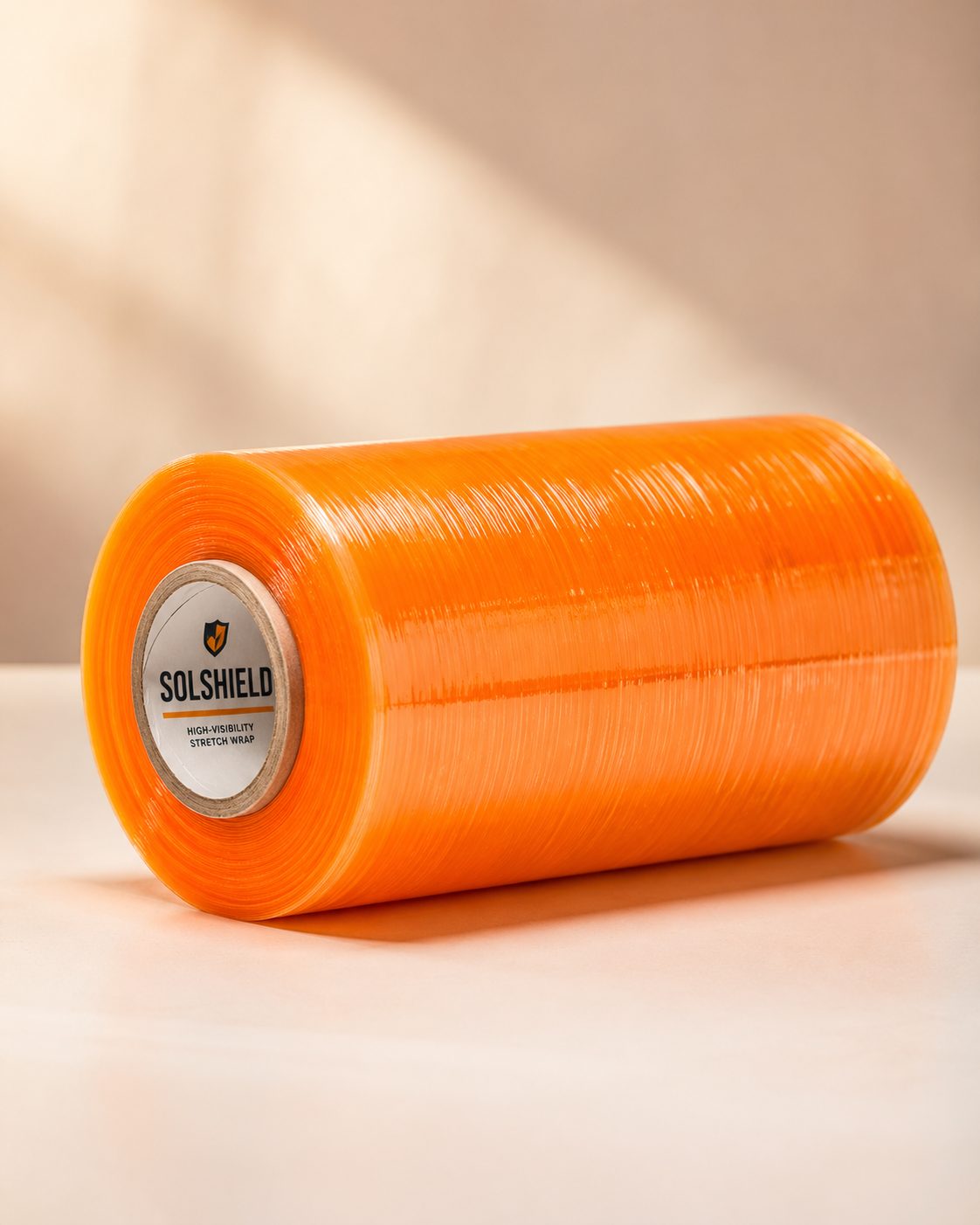
Specialty films deserve their own line too. Colored opaque wrap and high-visibility safety wrap are often used for a subset of loads, such as hazardous goods, returns or work-in-process, so size them to that subset rather than to total outbound volume.
How much safety stock of branded pallet wrap should you keep on hand?
Branded pallet wrap safety stock should cover at least the full turnaround of a reorder, plus a margin for surprises. Custom Pallet Wrap returns a free mockup within 24 hours and standard turnaround is about 2 weeks after you approve the design, with faster turnaround available through express shipping. Your buffer needs to cover that window and then some, because demand rarely holds steady while the next batch is in production.
Factors that should push your buffer higher:
- Seasonal peaks: if outbound volume climbs in certain months, size the buffer to the peak, not the average.
- New customers or contracts: a 3PL onboarding a new client can see usage jump overnight.
- Single-roll-type dependence: if one wrapper handles most of your volume, running dry on machine rolls stops branding on almost every load.
- Approval delays: if artwork changes need sign-off from a client or a brand team, add time for that before production even starts.
A practical rule is to set a reorder point, a shelf count that triggers the next order, and write it on the rack where the rolls are stored. When the stack hits that line, someone requests a quote. A visible trigger beats a calendar reminder, because it moves with real usage.
When does staging reorders beat one large custom pallet wrap order?
Staging reorders usually beats one large custom pallet wrap order when your artwork may change, your storage is tight, or your volume is still uncertain. A single big run makes sense only when the design is settled, the space is available and usage is predictable over the period the order covers.
Reasons to stage:
- Artwork changes: a rebrand, new website or new client logo can strand a large stock of old film.
- Storage limits: stretch film should be kept clean, dry and away from heat and direct sun, and many docks have little space like that to spare.
- Learning period: the first branded order often shows that one station uses more film than expected or that a different gauge suits a load better.
- Cash flow: smaller, regular orders spread the spend across the year.
Reasons to consolidate:
- Your design is stable and approved by everyone who needs to approve it.
- You want one consistent batch across every building.
- You would rather manage fewer purchase orders and deliveries.
Many buyers land in the middle: a modest opening order, a review of real consumption, then a larger standing order once the numbers are proven.
How do 3PLs and multi-client warehouses plan pallet wrap quantities?
3PLs and multi-client warehouses should plan pallet wrap quantities per design, not per building, because each client logo is a separate stock to manage. If you wrap outbound loads in each client’s branded film, every design needs its own usage figure, its own reorder point and its own shelf location.
A few habits keep multi-design programs under control:
- Tie each design to a client account. Pull pallet counts per client from your warehouse management system so usage is measured, not guessed.
- Keep a house design as the fallback. A branded film with your own warehouse name covers loads when a client design runs short, and still looks better than plain film.
- Review volumes at contract renewal. Client volume changes are the most common reason a branded stock runs short or sits unused.
- Label the rack clearly. With several designs on the floor, operators need to grab the right roll without unwrapping one to check.
Custom Pallet Wrap can quote several designs together, and each one gets its own free mockup within 24 hours, so you can approve a full client set in one round instead of chasing them one at a time.
What should you include in a quote request so the quantity is right?
A pallet wrap quote request should include your usage data, not just a roll count, so the quantity and roll specification can be checked before production. The more detail Custom Pallet Wrap has about how the film will be used, the easier it is to confirm that the roll type, gauge and print suit your loads.
Send these details through the quote form:
- Roll types and the quantity of each, matched to your wrapping stations
- Whether rolls go on a machine wrapper or are applied by hand
- The kind of loads you wrap, such as boxed goods, bags, drums or irregular freight
- Your logo file and any wording, such as a website or handling note
- How often you expect to reorder and whether you want staged deliveries
- Your delivery address and the date you need film on the dock
If you are not sure about gauge or roll type, say so. The how it works page shows the full path from quote to delivery, and you pay nothing until you approve the design, with unlimited free revisions along the way.
What are the common quantity mistakes on a first branded pallet wrap order?
The most common quantity mistake on a first branded pallet wrap order is sizing it from a guess instead of measured usage. Close behind are forgetting a roll type, ignoring turnaround time and letting old artwork pile up.
- Ordering only machine rolls. Manual stations keep wrapping in plain film and the branded look is patchy across the dock.
- Planning for average weeks. A peak season can burn through a stock sized for normal volume well before the reorder lands.
- No reorder point. Without a trigger on the rack, the order goes in when the last roll is already on the wrapper.
- Overbuying ahead of a rebrand. If a logo or website change is coming, keep the opening order lean.
- Mixing new and old stock. Use older rolls first so film does not sit in storage longer than it needs to.
For a broader look at the buying process, the custom pallet wrap page covers gauges and colors, and manufacturers can see how outbound programs are set up on the pallet wrap for manufacturers page.
Frequently asked questions
How can I estimate how many pallets one roll of custom pallet wrap will cover?
The number of pallets one roll of custom pallet wrap covers is best measured on your own dock. Count empty cores against outbound pallets over a normal shipping period, station by station. Load height, corners, revolutions and pre-stretch settings all change the result, so a figure from another warehouse rarely transfers. Custom Pallet Wrap can review your measurements when you request a quote.
Should my first custom pallet wrap order be a trial run or a full supply?
A first custom pallet wrap order works well as a trial run when usage is uncertain or artwork may still change. A smaller opening order lets you confirm how the print looks on real loads and how quickly each station uses film. Once consumption is proven, you can move to a larger standing order with confidence and fewer surprises.
What reorder point should I set for branded pallet wrap?
A reorder point for branded pallet wrap is the shelf count that triggers your next order. Set it high enough to cover standard turnaround of about 2 weeks after approval, plus a margin for busy periods and any time needed for design sign-off. Mark the line on the rack itself so warehouse staff can see when the next order is due.
How should seasonal peaks change my pallet wrap quantities?
Seasonal peaks should raise both your pallet wrap order size and your safety stock ahead of the busy months. Look at last year's outbound volume by month and size film to the peak, not the yearly average. Placing the order early gives Custom Pallet Wrap time for the free mockup and production before the rush hits your docks.
Can I spread one custom pallet wrap order across several scheduled deliveries?
Staged deliveries of custom pallet wrap are worth asking about when storage space is tight. Mention your preferred delivery rhythm in the quote request so Custom Pallet Wrap can confirm what works for your program. Staging keeps the dock clear, spreads spending across the year and reduces the risk of holding a large stock when artwork changes.
How do I plan pallet wrap quantities for several client logos in a 3PL?
Pallet wrap quantities for several client logos in a 3PL should be planned design by design. Pull outbound pallet counts per client from your warehouse management system, set a separate reorder point for each design and store each on a clearly labeled rack. Keeping a house-branded film as a fallback covers any client design that runs short between orders.
Does pre-stretched eco pallet wrap change how many rolls I need?
Pre-stretched eco pallet wrap changes roll planning because the film is already stretched at the factory and the rolls are lighter for operators to handle. Plan by the number of loads each roll covers on your dock rather than by roll count alone. Track a short trial period, then size your Custom Pallet Wrap order to that measured coverage.
Should I order high-visibility safety pallet wrap for every load?
High-visibility safety pallet wrap is usually ordered for a subset of loads rather than every outbound pallet. Hazardous goods, fragile freight, returns or priority shipments are common candidates. Count how many of those loads you ship in a typical period and size the safety film to that number, alongside your main stock of branded clear or colored film.
How much warehouse space should I set aside for a branded pallet wrap order?
Warehouse space for branded pallet wrap depends on roll type and how much stock you hold at once. Choose a clean, dry spot away from heat, direct sun and forklift traffic, close to the wrapping stations. If that space is limited, staged reorders from Custom Pallet Wrap keep stock manageable without ever leaving loads wrapped in plain film.
Is it smarter to order more custom pallet wrap before a planned rebrand?
Ordering extra custom pallet wrap just before a planned rebrand is usually a mistake. Any rolls left over after the new logo launches will carry outdated branding onto your loads. Keep stock lean in the months before the change, then approve the new design on a free mockup within 24 hours so the updated film is ready on time.
What usage data helps Custom Pallet Wrap check my order quantity?
Pallet wrap usage data that helps most includes outbound pallets per shift, rolls consumed per station, the roll types each station runs and the kinds of loads you wrap. Share whether film goes on a machine wrapper or by hand. With that detail, Custom Pallet Wrap can check that the quantity and specification on your quote suit your operation.
Get a free mockup for your pallet wrap
Send your logo or idea and the quantity you have in mind. Custom Pallet Wrap returns a free mockup within 24 hours, you approve the design before anything is produced, and standard turnaround is about two weeks with faster options available. Get a custom quote.